



If you live in the northern hemisphere and have water-filled radiators in your house, you are probably relying on those radiators pretty heavily right now. Many countries have been hit by very low temperatures this week. Below -12C in parts of England, for example.
Radiators, called “rads” by no-nonsense plumbers, are a type of heat emitter. They distribute warmth into your home. But how many people ever really think about them, how they work, or how to run them as efficiently as possible? You read The Reengineer – so I’m guessing you care about this stuff more than most. Let me tell you what I know.
All right, you’re on. Where do we start?
Take a typical British home. For sake of argument, imagine one with a condensing gas boiler and a radiator in pretty much every room. The boiler heats up water to a certain temperature, known as the flow temperature, and sends that water to the radiators – at least those that have open valves. The radiators can be controlled manually or by thermostatic valves (TRVs), which will close above a certain temperature so the system avoids needlessly giving heat to a room that’s already at 20C, say.
Tell me more about flow temperatures!
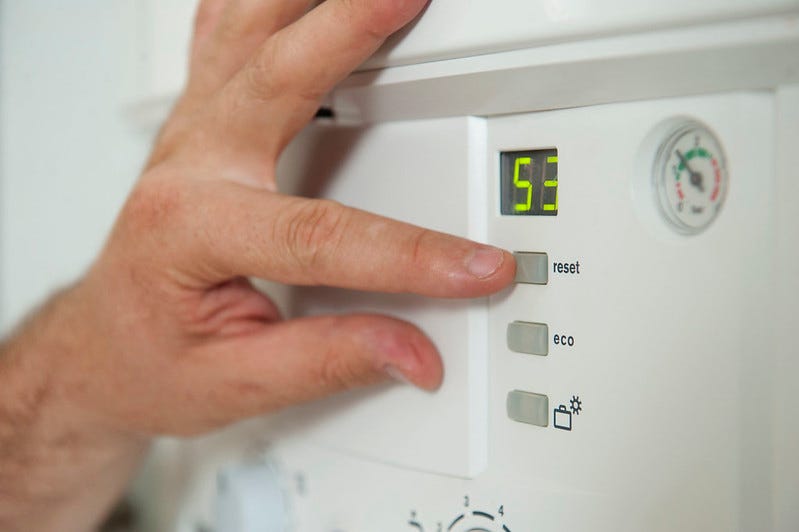
Flow temperature is a really critical thing to get your head around. For the past few months, the flow temperature of my own gas boiler has been set to 45C. In the past, boilers were commonly set to have flow temperatures of around 75C, or even higher, and some still are set this high. That’s hot enough to hurt you if you put your hand on a radiator for too long.
If the system runs too hot, it will be inefficient. Too cold and you’ll struggle to reach the desired room temperature. There’s a Goldilocks flow temperature for every home. You just have to find it.
How low can you go?
In theory, as low as you like – though not below the target room temperature, obviously. People who have heat pumps might have flow temperatures as low as 30C or so. That’s cooler than the human body but still enough, in some cases, to warm a room.
Factors that can affect your flow temperature requirements include your home’s insulation and how big your heat emitters are. Really big rads or underfloor heating with a large surface area (the whole floor!) mean you can get away with lower flow temperatures, generally. The lower you can go with this setting, the better, from an energy efficiency standpoint. And such an approach means the heating tends to be on for longer meaning you get more consistent internal temperatures within your home. It’s the opposite of blasting high temperature heating for a couple of hours and then shutting it off, allowing the house to cool down significantly.
One note of caution: if you have a hot water tank, you should avoid setting the flow temperature to that device lower than 60C, in order to prevent legionella bacteria colonising the tank and contaminating your tap water. Though ask your installer or heating engineer about anti-legionella cycles, which might be preferable, efficiency-wise, to constantly maintaining that 60C temperature. To be clear, the flow temperatures I’m referring to in this article are specifically for the water in radiators only.
And why is that so important for efficiency, though?
First of all, if you’ve got a low flow temperature, then your boiler or heat pump doesn’t have to work so hard to achieve said temperature. That’s the first thing.
Plus, I mentioned “condensing” gas boilers above. That is a boiler that recovers some heat from gases as they head towards the flue. If things are cool enough, these gases condense and return warmth back to the system. If the boiler is running too hot, it won’t take advantage of this design feature. Most manufacturers recommend a flow temperature of around 55C to ensure some condensing is able to boost the overall efficiency of system. A recent campaign, the Money Saving Boiler Challenge, encouraged people to turn their boilers down to 60C to help with the cost of living crisis.
It’s worth noting that boilers can never be 100% efficient, some energy in the oil or gas burned is always lost. Heat pumps can take 1 kilowatt hour of electricity and turn it into multiple kilowatt hours of heat, though. Lower flow temperatures can help ensure you get more than just two or three units of heat per unit of electricity consumed.
All right. Do you implement this flow temperature stuff yourself?
Yes, my house is reasonably well-insulated. It’s a 1950s build with 60mm retrofitted cavity wall insulation (grey plastic beads) and 300-400mm of rock wool laid in the loft. There is also insulation under most of the concrete subfloors in the ground floor. The property has double glazing, too. And there are reasonably large radiators called Type 22s – this means they have double panels each with a set of fins helping to distribute heat.
All of this allows me to run my gas-fired boiler with a flow temperature down at 45C, even during the recent days and nights when outdoor temperatures dipped below 0C. Inside, I like to keep the rooms at a minimum of 19C, sometimes a bit higher. In the future, if I ever install a heat pump, I hope it will work reasonably well with the system as-is, though I’ll have to get an expert to verify that.
Don’t changes in the weather affect things, though?
Yes, because outdoor weather varies across the year, the optimum flow temperature for any house will vary, too. This is why some heating systems have weather compensators, which automatically increase or decrease the flow temperature, relative to conditions outside. Shaving off a few degrees here or there could save you money during the course of the year. These weather compensators are available for fossil fuel boilers as well as heat pumps.
Any other factors?
Remember that radiators ideally ought to be unencumbered by fabrics or decorative casings, properly bled, and also balanced. Balancing means that the valves connecting radiators to your heating pipes are set so as to ensure enough water flows to rads right at the “end” of the system – typically, those furthest away from the boiler. There are some good guides online about how to do this.
Do smart heating systems add value?
They can – for example, by allowing you to adjust schedules in a fine-grained way, or by tracking your household activity automatically, meaning you don’t overheat the house during times when you’re not there, for example. Some systems can also modulate your boiler, shifting its power output up or down, to save even more gas. But whether this is possible depends on the interoperability of your smart heating gadgets and the boiler itself. The heating industry is gradually being forced to improve compatibility between all this tech.
Finally, smart radiator valves, or smart TRVs, can also help track and control room temperatures intelligently. But one pitfall of smart systems is that they can sometimes give a false sense of security. You may assume they’re running your heating really efficiently but the only way to know is to check it yourself. Plus, for heat pump-based systems, TRVs might not actually be necessary or beneficial, so check with your installer or engineer.
So, my ultimate recommendation is to keep some kind of record of how your heating system is performing yourself, whatever tech you have. A simple spreadsheet of weekly meter readings – or a smart meter – as well as thermometers dotted around your house will reveal how things are running. You don’t need to monitor it constantly throughout the year, unless you want to, but checking the data occasionally is a good idea.
If you have other helpful tips for running an efficient heating system, why not drop them in the comments below?
Further reading on this week’s story
In 2023, I wrote a piece for Wired that covers a little more detail on all this stuff.
And, if you want even more information and are ready to begin adjusting your system, you might also check out advice from The Heating Hub, an independent consultancy or Heat Geek, a heating industry training firm.
Update: Added a note about hot water tank safety.
Thanks for reading! If you enjoyed this story, don’t forget to share it with your friends and colleagues. You can also subscribe to The Reengineer and follow me on Bluesky.