

Long-lost shipwreck found thanks to wind farm in 'mind-blowing' discovery
The coal-carrying City of Hobart, which sank in 1877, was a kind of 'hybrid'

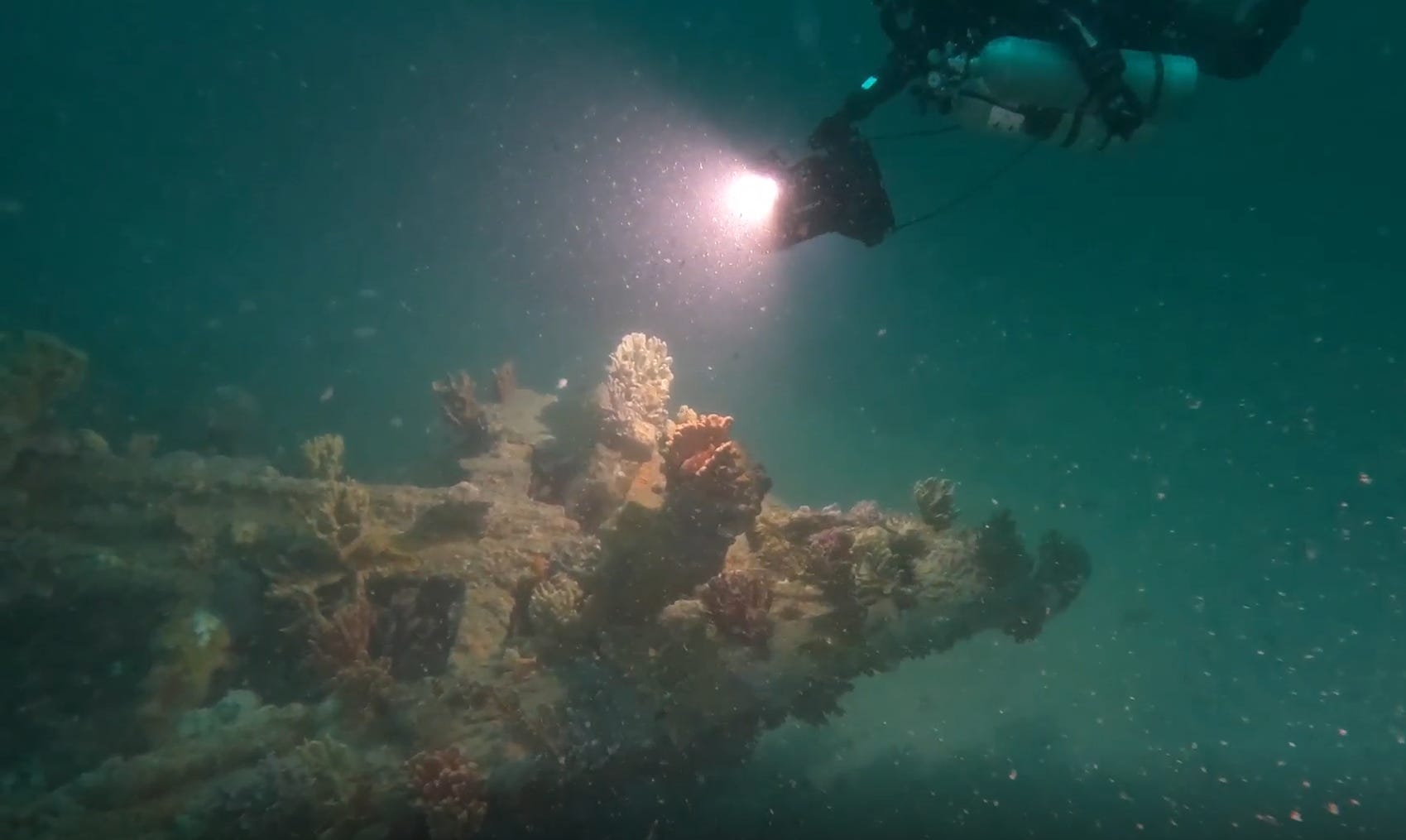
At first, it was just a shadow in the deep, lying on the seabed, 60m below the surface. Divers gently kicked their way towards its dusky form. As they got closer, beams from their torches picked out the silhouette of a long-lost ship – the sharpness of its bow clearly visible. Mark Ryan, founding president of Southern Ocean Exploration, a maritime archaeology firm, had spent years waiting for this moment.
He knew exactly what he was looking at – the wreck of a ship called the City of Hobart, which sank off the south-eastern coast of Australia, north of Tasmania, in 1877.
Adrenalin took over. Ryan looked across at one of his diving buddies as they exchanged nods. Silent gestures in the gloom that telegraphed what they were feeling. It’s here. They’d found it.
“It’s just mind-blowing,” says Ryan, recalling the moment, “knowing that you’re the first person to see that ship in 149 years.” They made the dive in February 2026.
Footage courtesy of Southern Ocean Exploration.
So close
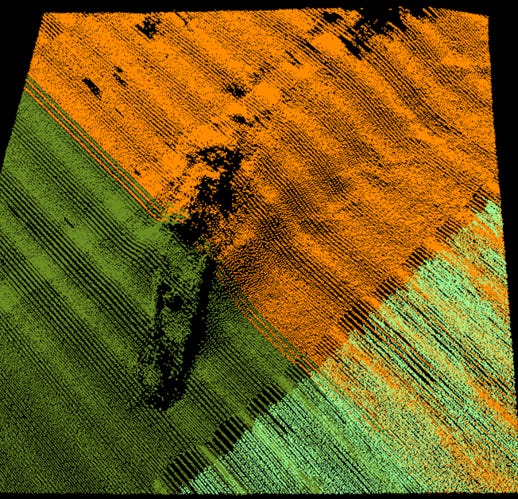
However, it’s nearly 20 years since Ryan and his colleagues first began searching for the City of Hobart. As part of that journey, in 2015 they carried out an extensive survey using sonar equipment to scan the seabed in the hope of catching sight of it but came up short. Incredibly, at one point they were just 47m away from the ship’s actual resting place.
That was as close as they came, until another sonar survey was carried out last year by Iberdrola, a renewable energy firm seeking to build an offshore wind farm in the area.
Iberdrola found two shipwrecks during that work in 2025 and after they asked Ryan and his colleagues to investigate further, the dive crew confirmed that one of those wrecks was the somewhat mysterious City of Hobart. This is the latest example of an archaeological discovery made possible due to work on renewable energy installations. In 2024, for instance, archaeologists found important Anglo-Saxon artefacts at a location in north-eastern England, where cables were being laid for the Dogger Bank Wind Farm.
The City of Hobart sank without a trace on 24 July 1877 – while carrying 558 tonnes of fossil fuels in the form of coal. “It is a little bit ironic,” says Ryan. “The people that helped find it are a renewable energy company.” Iberdrola says it plans to construct a 700 sq m, 3 gigawatt offshore wind farm in the area, comprised of roughly 150 turbines – each with a capacity of roughly 20 megawatts.
The company estimates that the wind farm will be able to supply 2.25 million homes and the wreck of the City of Hobart, which is to be left intact, will not affect the ambitions of the project, a spokeswoman says.
Ryan praises Iberdrola’s handling of the latest discovery and, on wind farms turning up archaeological finds in general, he says, “If that’s what these things are all about then I think, bring it on, it’s a good thing.”
Elsewhere, the rapid expansion of offshore wind farms has at times concerned archaeologists – such as in 2022, when researchers voiced fears that offshore wind developments in the North Sea might not coincide with sufficient opportunities to excavate the now-submerged region of Doggerland, which was an inhabited landmass between 15,000 and 8,000 years ago.
Anatomy of a sinking
When the City of Hobart sank back in 1877, the vessel’s crew were thankfully able to abandon the ship safely. But the exact location of the sinking had remained an enigma until now because nobody at the time had recorded the ship’s last known coordinates.
“Back [then], no-one’s thinking that anybody’s going to dive and see the ship again,” says Ryan. “But, of course, with the invention of modern day scuba, and guys like us, we are.”
As for why the vessel ran into trouble in the first place, the story goes that the City of Hobart’s aging propeller shaft snapped, causing a leak in the hull. The now heavily-corroded propeller and part of the shaft are clearly visible on the seabed separated from the rest of the wreck, says Ryan, which he says is evidence that backs up the old tale of the sinking.
“This wreck has been undisturbed,” says Phillip Massaad, an independent researcher and author of the book Rusting Relics: Exploring Australia’s Shipwreck Heritage. “That’s fantastic from an archaeological point of view.”
He says that there could be some artefacts belonging to the crew still within the wreck and that it might also be possible to work out how the City of Hobart was converted from a passenger and cargo vessel into a cargo-only ship, the details of which are now lost.
Ryan adds that he would like to study the site in more detail using photogrammetry, a method of making 3D models of something using many thousands of still images.
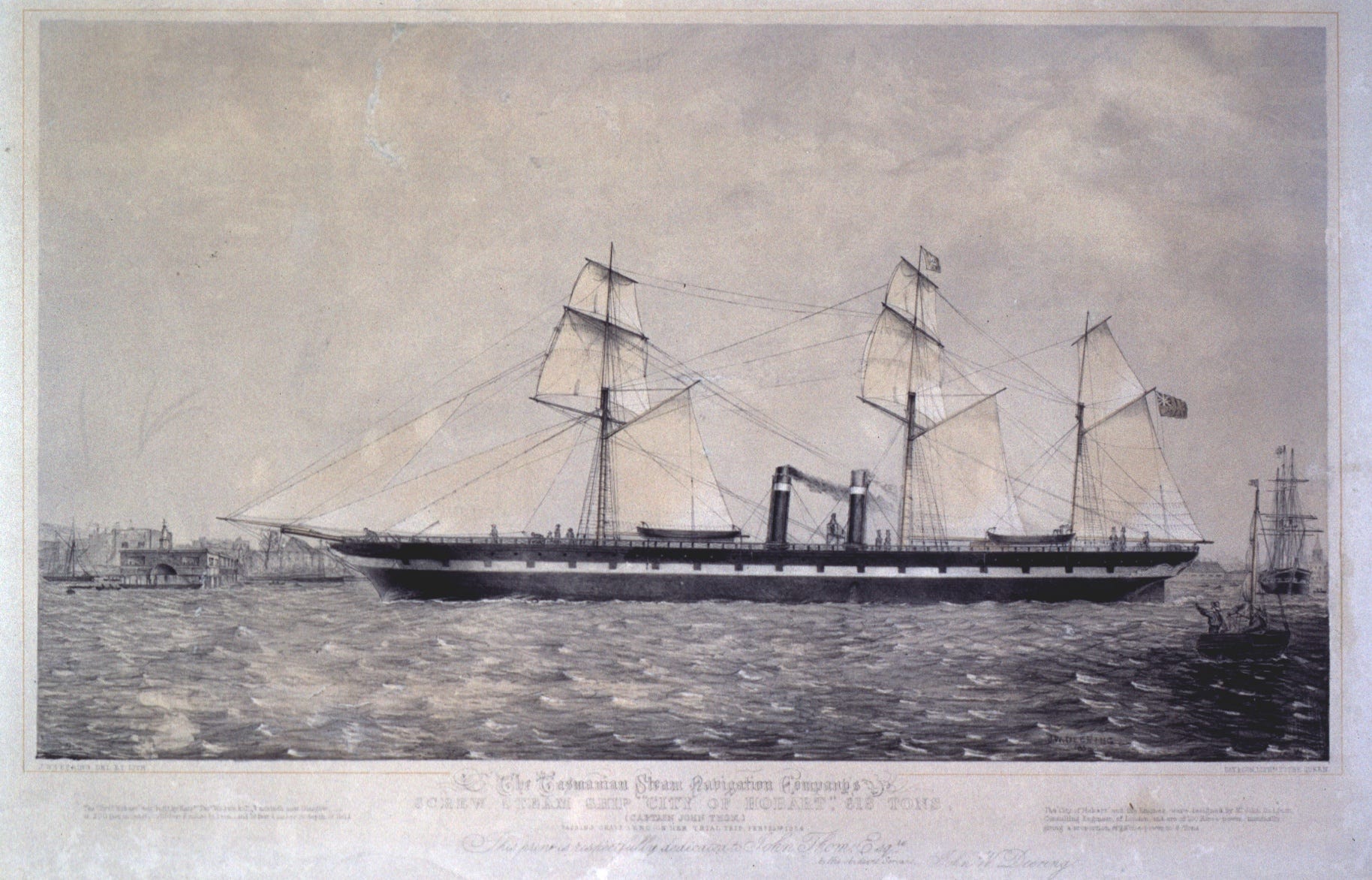
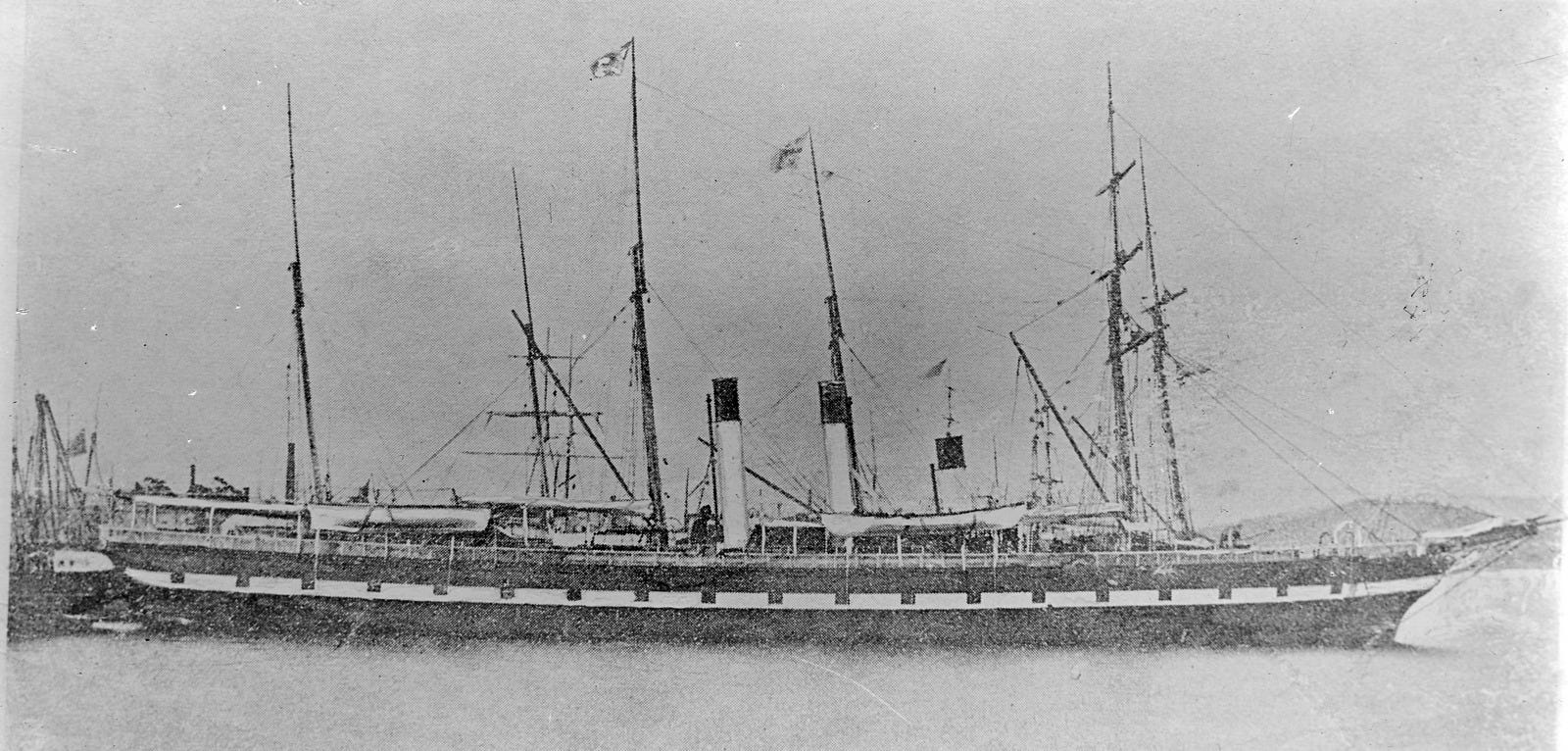
The City of Hobart has piqued the interest of maritime researchers partly because it was designed at a time when commercial vessels were transitioning from classic sailing ships to steamships. The Hobart was actually able to use both means of propulsion. “It’s like a hybrid,” says Ryan – a hybrid from the other end of the industrial revolution, when fossil fuels were coming in, rather than, arguably, on their way out.
Built in 1853 in England, it was a time when people understood steamships were “the future”, explains Massaad, but the technology had yet to be perfected. “You had this wonderful fusion of a classic-looking sailing ship,” he says. “It even had fake gun ports painted on the side – that was a fashion choice.”
‘It boggles my mind’
Other shipwrecks have been located thanks to offshore wind farm explorations. In 2023, a Lithuanian energy company detected a strange form on the seabed of the Baltic Sea, which was confirmed to be a shipwreck the following year.
“The whole idea that these wrecks are being unintentionally discovered, it just boggles my mind,” says Massaad. He also suggests that Australians tend to prioritise the land, and the outback, when considering their nation’s history. But “these shipwrecks matter”, he argues: “They tell us what our past was.”
Ryan is itching to get in touch with Iberdrola again to see if there are any other projects that he might get involved in – now that his nearly two decade-long dream of finding the City of Hobart has finally come true.
Further reading on this week’s story
There is a long list of archaeological discoveries related to wind farm projects. Two more worth mentioning include the mysterious 3,300 year-old mass burial unearthed in Scotland in 2020 and 2021, and the medieval artefacts found in Suffolk during wind farm cable excavations in Suffolk last year.
Wessex Archaeology, a company that specialises in archaeological and heritage services, has published a succession of guides detailing best practices for how to handle archaeological investigations alongside offshore wind farm development.
Thanks for reading! If you enjoyed this story, don’t forget to share it with your friends and colleagues. You can also subscribe to The Reengineer and follow me on Bluesky.