

Mini waterwheel produces enough power to, in theory, supply multiple homes
Installing the floating contraption takes just a few hours

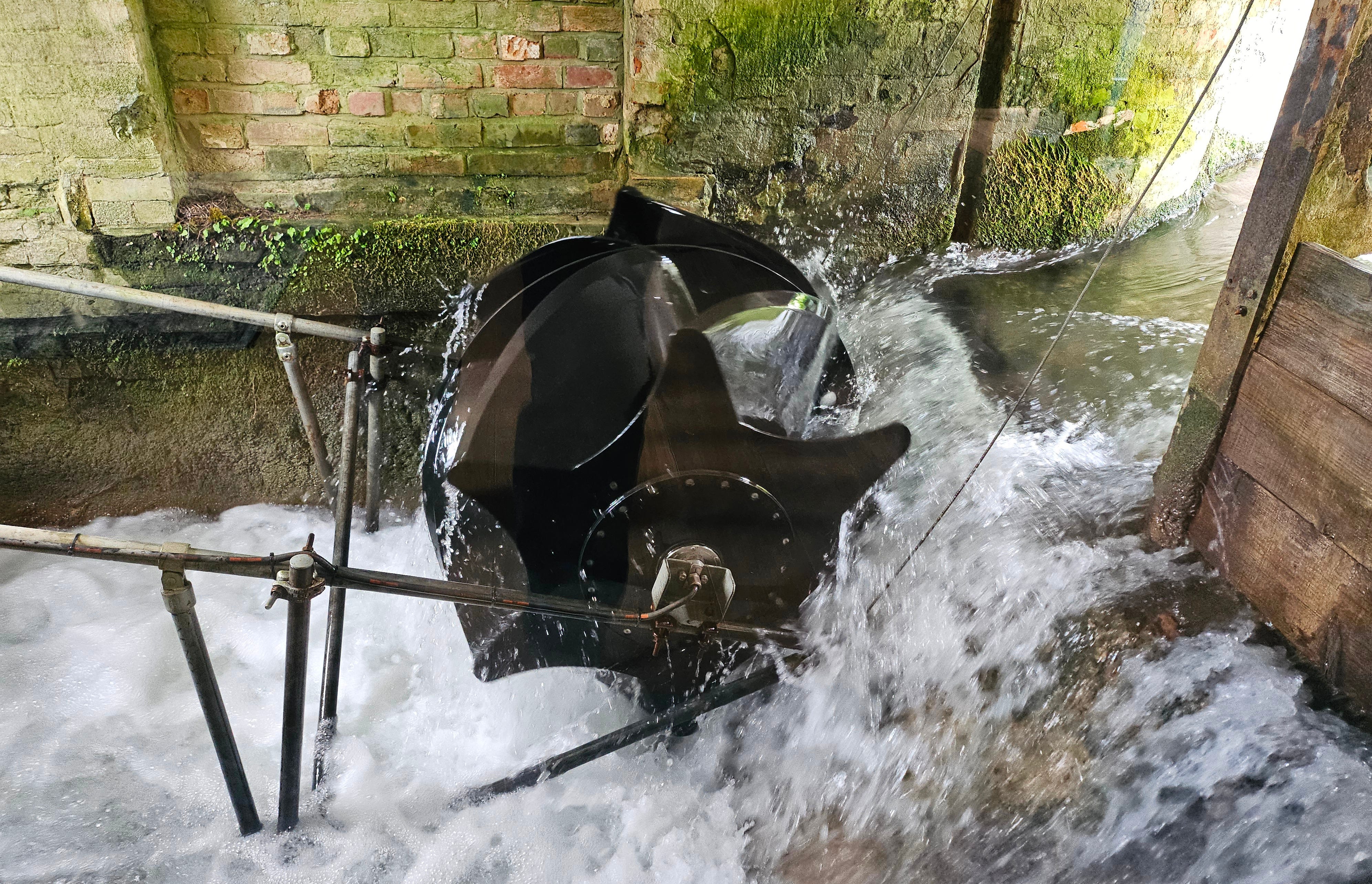
You’ve heard of solar panels on rooftops, wind turbines on hillsides or at sea – but don’t forget waterwheels at sewage plants. Scottish Water recently announced it had installed a miniature waterwheel in a downward-sloping channel at its Shieldhall Wastewater Treatment Works in Glasgow.
“It’s a traditional waterwheel that floats,” says Sam Maitland, managing director of PicoStream Technologies, which supplied the device. “It’s on a hinge,” he adds, referring to how the waterwheel rests on the surface of flowing water while attached to hinged arms, a sort of frame, allowing it to rise and fall. The idea is to prevent the wheel becoming overwhelmed and causing a flood. Crucially, the device spins constantly, 24 hours a day.
Scottish Water confirmed its trial was ongoing but declined to share any results just yet.
“In a good site, they will generate 10-12,000 kilowatt hours a year,” says Maitland. That’s roughly four times the amount of electricity the average British home uses annually. Maitland stresses that, in practice, it can be difficult to connect one power-generating device to multiple properties but PicoStream could support large homes or perhaps farms with cottages on site using the same grid connection, for example.
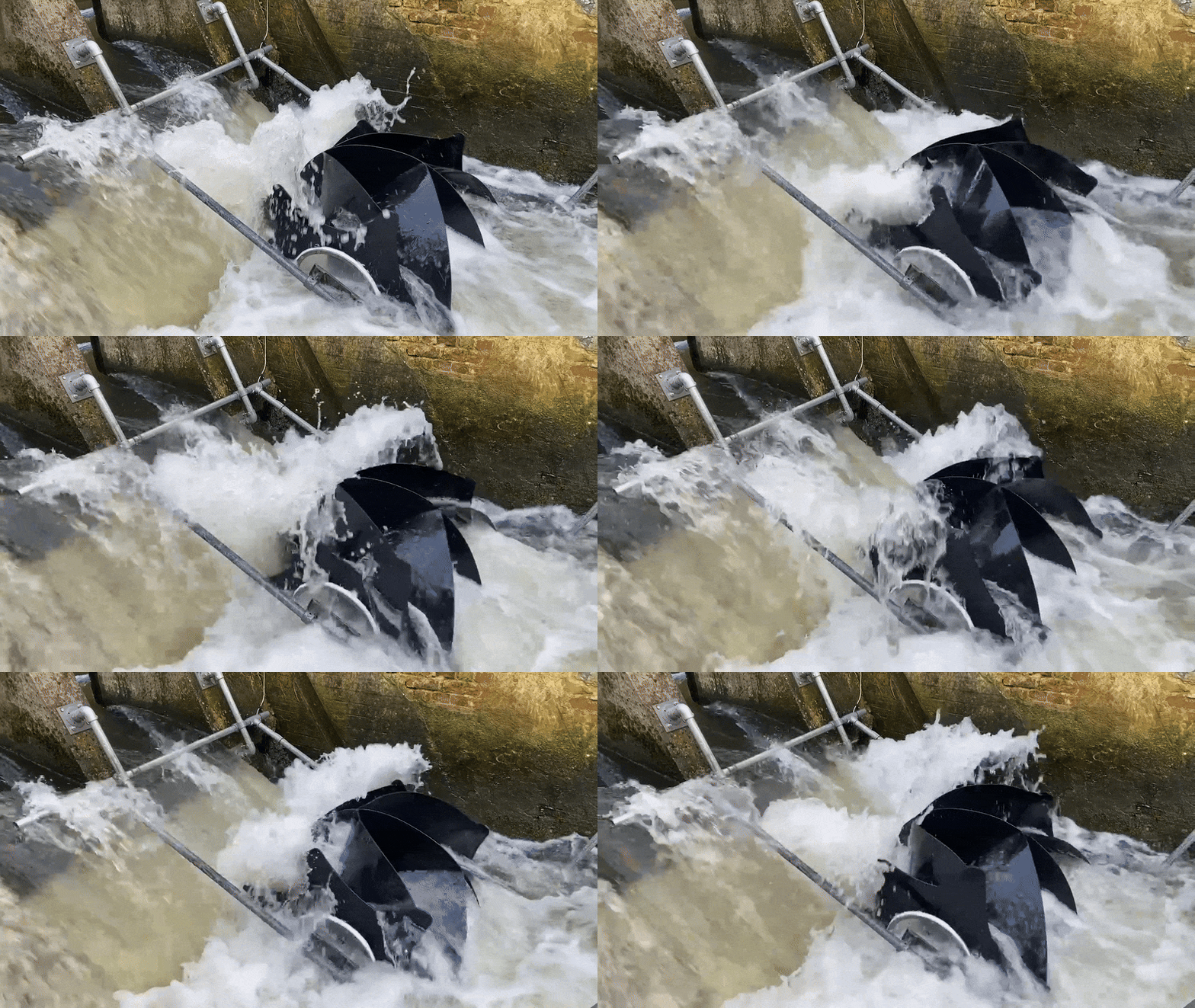
The PicoStream waterwheels put out about 2.5 kilowatts in the fastest-flowing conditions. A handful have been installed to date, mostly in England. At one former mill site, now a private home, the wheel is currently generating less than usual given recent dry weather, though still churning out roughly eight kilowatt hours per day. That’s slightly more than The Reengineer Towers uses daily.
Water flows, and therefore energy generation, tend to rise in winter, which Maitland points out would complement electricity demand – since that is generally higher during the winter months, too.
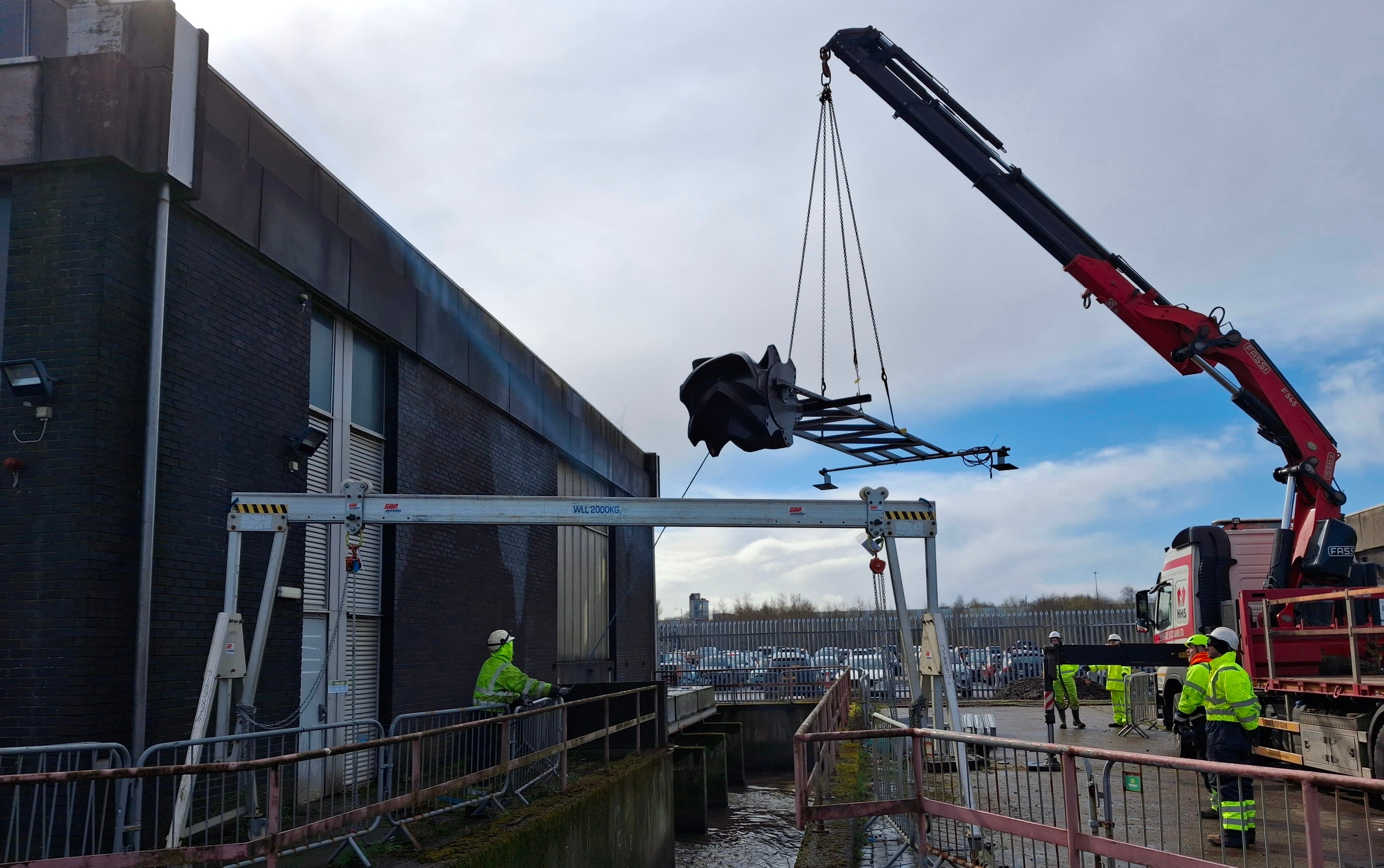
The installation at Scottish Water’s site only took a few hours to complete. Maitland says a PicoStream costs “less than £20,000” and notes that, because it is positioned on top of existing water flows, there’s no need to apply for a costly Environment Agency licence before installing one.
Last year, I wrote about how electricity-generating waterwheels were gathering new attention.
The PicoStream, currently in its early days of deployment, seems a good example of this, if not a solution that would work absolutely everywhere. Larger wheels and Archimedes screw devices might suit some users better, and could potentially generate much more power.
Gerald Müller at the University of Southampton, who studies waterways and waterwheels, says that other waterwheel designs – such as more traditional overshot wheels – would be more efficient in very fast flows. On the other hand, he highlights that the PicoStream is “very simple”.
So, as an easy way of harnessing energy available in extant water flows, slapping a PicoStream into place might make a lot of sense.
Maitland says his firm is now in talks with water companies around Great Britain. “That’s the big business opportunity for us,” he adds.
Drying things out
Water, water is hardly everywhere right now, though, as a massive drought has descended on half of England.
Train companies in the south and east of the country have had to slow trains down this week because soil under tracks has dried up and shrunk, playing havoc with the shape of the rails. It makes for a bumpier, and potentially unsafe, ride.
I heard a discussion about this on BBC Radio 4’s World at One this week and it was really quite fascinating, leading me to investigate what technological solutions might help alleviate this issue, which, by the way, is known as Soil Moisture Deficit (SMD).
South Western Railway, one of the firms currently battling SMD, has said it is exploring methods of injecting nutrients into the soil below track to create “a calcium carbon skeleton, which provides more support when the clay soil shrinks”. I assume they mean calcium carbonate, there – the same material you find in seashells.

The company has also looked into injecting expanding foam beneath tracks straddling retreating soils, and “self-adjusting sleepers”. These sleepers, the chunky supports that lie underneath metal rails, contain a built-in reservoir of gravel known as chippings. The gravel would automatically drop down and fill in gaps left as the ground shrinks.
Micro-piles, a stilt-shaped foundation buried in the ground, could also help support rails as the soil becomes increasingly unreliable.
But, as a gardener, I couldn’t help wondering whether a bit of mulching – covering embankments with dead plant material to prevent excessive moisture loss – would help. It’s a key strategy that farmers use, especially in arid areas.
Well, maybe mulch alone isn’t enough to keep the 09.38 from Brighton running on time, but one option I did stumble on was “hydroseeding”. This is where plant seeds, water and nutrients are injected into ground including railway embankments, in order to reinforce such formations with nature’s help. Railways buttressed by native plants. Vines for lines! What do you think?
The sweaty jersey
The below chart caught my eye the other day. In recent years, the Tour de France has got noticeably hotter. Banned from stuffing ice-filled socks into their kit, riders at this year’s race resorted instead to bathing their forearms in cold water and spraying quickly-evaporating – and therefore cooling – pure alcohol onto their bodies in order to stay cool.
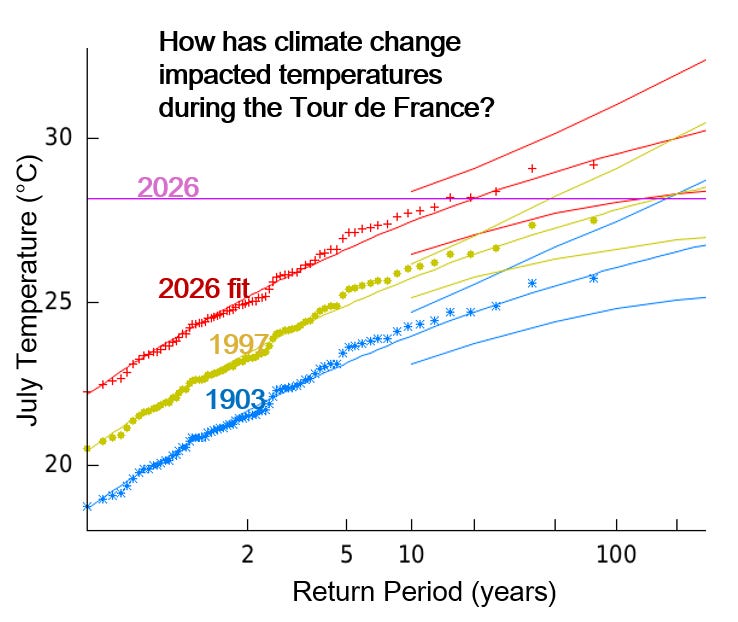
“For the riders themselves, the route makes a big difference,” creator of the chart, Vikki Thompson at the University of Edinburgh, tells The Reengineer. “This year they started in Barcelona with several incredibly hot days in the first week. […] Next year, the tour starts in Edinburgh – a smart idea to try to avoid extreme heat.” She notes that there have already been discussions in the cycling world around holding the Tour de France at cooler times of the year.
Thompson says that the data she used for 2026 is preliminary and only goes up to 21 July. “The extra week [since then] would likely increase the 2026 value a little as it is towards the end of the month where climatologically it is hotter,” she adds.
As regular readers know, I have long had an interest in how sporting events are adapting to climate change. Remember that the great Sebastian Coe – Olympic gold medallist and president of World Athletics – has said the Olympic calendar may have to be, and I quote, “reengineered” due to climate change.
The Reengineer Monitor – Stories in climate change and adaptation from around the world

A floating lab, the Tara Polar Station, is on its way from France to the Arctic. At the time of writing, the vessel was moving along the eastern coast of Norway. The station is a marvel of engineering designed to survive incredibly harsh conditions – including being trapped in vast swathes of sea ice. 12 scientists will live aboard the vessel for months on end. They intend to study how climate change and pollution are affecting Arctic ecosystems.
