

‘My heat pump triumphed during Alaska’s snowpocalypse’
Juneau's severest winter storm in decades was no match for some air-to-air heat pumps

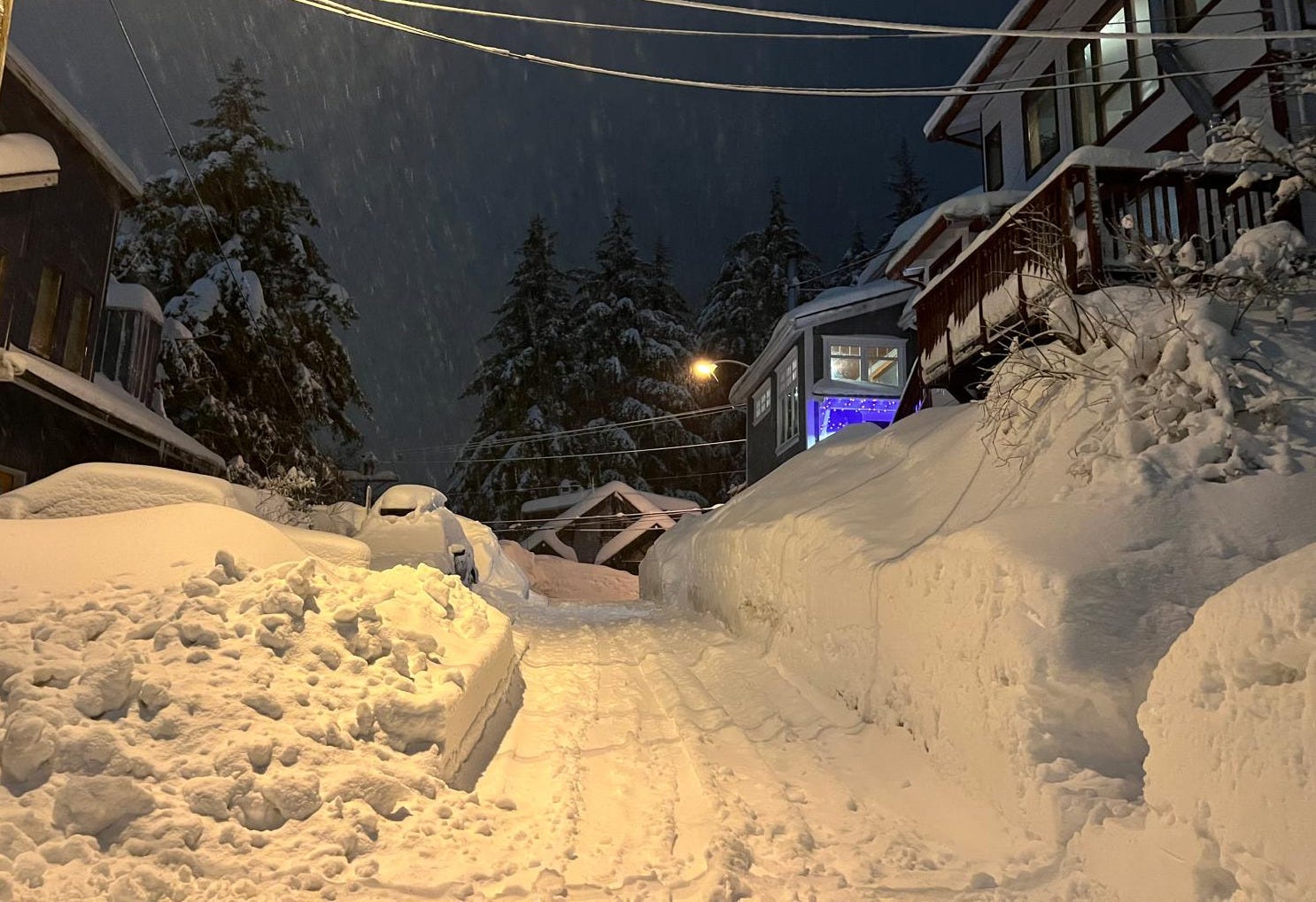
It was the kind of storm that hadn’t hit Alaska’s capital Juneau for many decades. Quickly dubbed “snowpocalypse”, no-one could recall anything quite like it since at least the 1960s. Genevieve Gagne-Hawes, who was born and raised in Juneau, was left stunned by the blizzards and snowdrifts.
I first spoke to Gagne-Hawes back in 2023, for a Wired story about heat pump adoption in Alaska. When I heard about the recent snowstorm, I got back in touch to find out whether her heat pump had coped with all the extreme weather.
Snowpocalypse began with a big freeze. Initially, in late December, temperatures dropped to around -20C in Juneau, which is in the southern part of Alaska. Gagne-Hawes and her husband were out of town at the time while a family member watched her house. The property’s air-to-air heat pump combined with some electric heaters on the upper storey kept the house-sitter warm.
When Gagne-Hawes and her husband returned home, temperatures climbed somewhat – but that’s when the snow came.
‘It was wild’
“It just started snowing and didn’t stop,” she recalls. “It was really wild.” Nearly two metres of snow fell in some areas.
The city’s snow ploughs kept the big arterial roads clear, though this was not without hiccups. Many smaller roads were completely blocked for days. “You would be trying to shovel your porch [and] the snow either side of you was taller than your steps,” says Gagne-Hawes. Her husband had to remove significant amounts of snow from their home’s metal roof to prevent the huge weight potentially collapsing the structure.
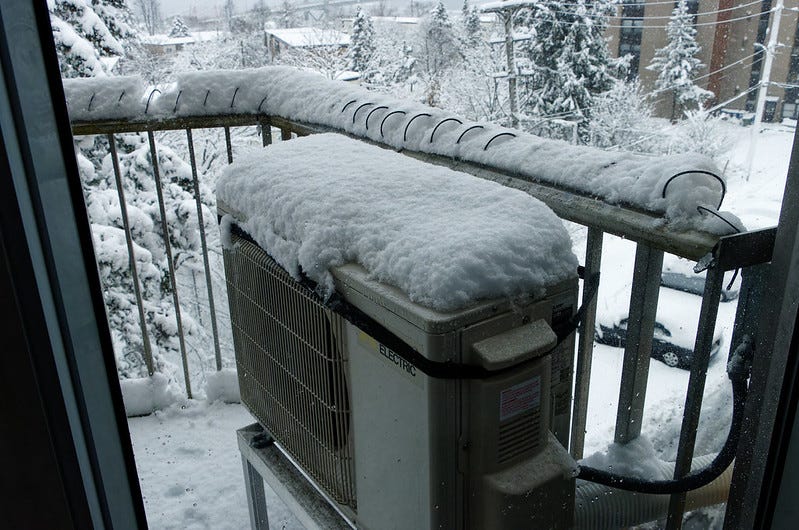
All the while, the heat pump functioned like “a little workhorse”, says Gagne-Hawes, toiling except for one or two brief periods when there were power cuts. “When the snow falls, it does cake onto the sides [of the heat pump] – but then the defrost cycle runs and it all melts off,” she says. “I was a little nervous that it wouldn’t be able to handle the heavy snow loads.”
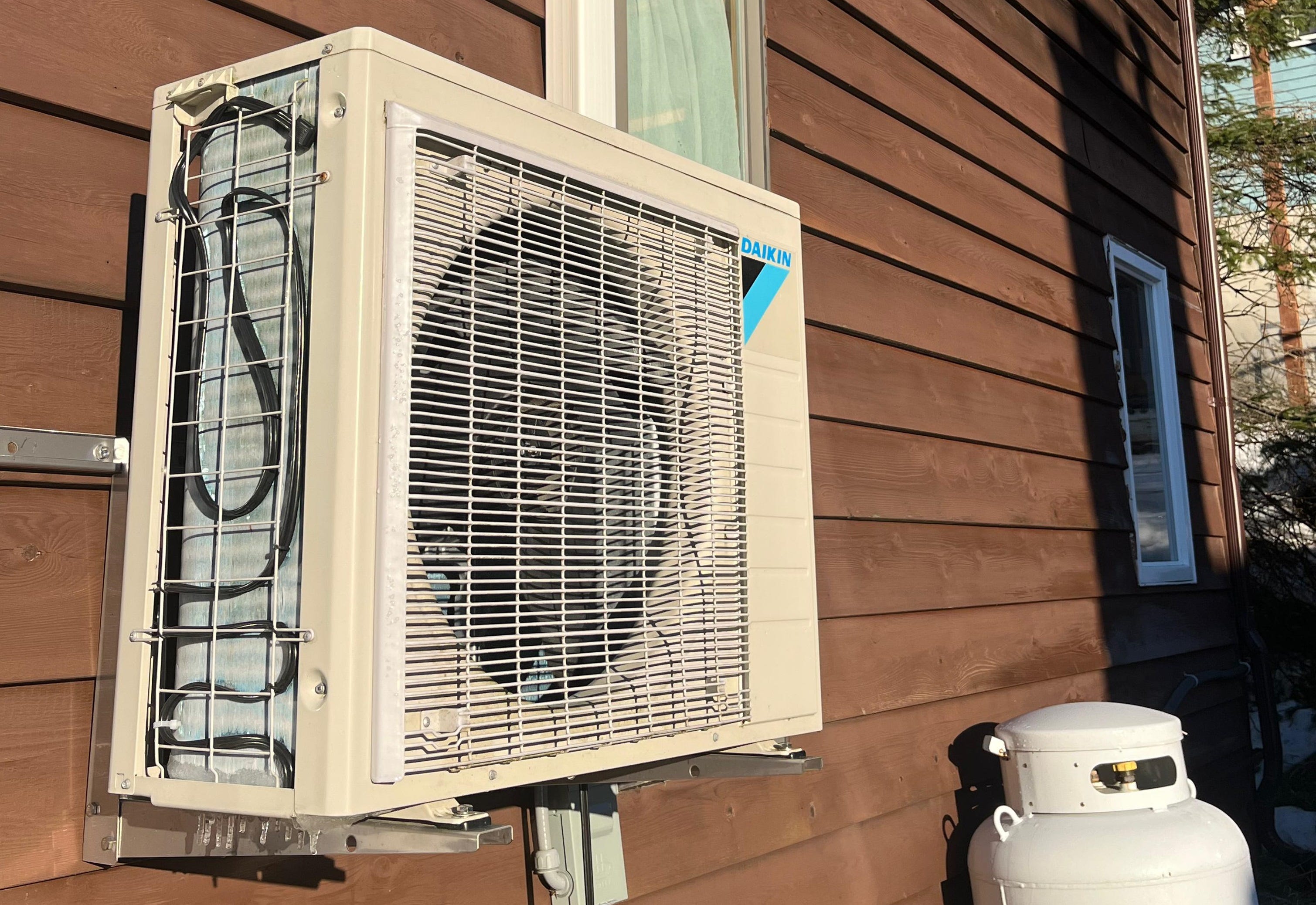
One risk in these conditions is so much snow falling that heat pumps actually get completely buried. Gagne-Hawes’ device, however, sits 0.75m off the ground so keeping the area around it clear was fairly easy, apparently.
Inevitably, people’s experiences of heat pump performance during the snowstorm will have varied around Juneau. Gagne-Hawes says one of her friends owns an older heat pump that had a little more difficulty.
“She was having some issues with the heat pump not keeping up when the temperature dropped,” she says. In recent years, heat pump technology has evolved to cope with very cold conditions, even temperatures below -20C.
I spoke to another resident of Juneau, Supanika Ordóñez, who also owns a heat pump. She too found that it performed well during the storm. “I was actually kind of worried about it just because of how high the snow came,” she says. “It was coming up to our windows.”
But, despite this, the heat pump just kept on working. She adds, “All of the houses in our neighbourhood have heat pumps.”
Warmer climate, more snow
Being a case of very cold weather, you might think that snowpocalypse was just a freak event. But climate change might have played a role in it – and could possibly make heavy snowstorms more common here in the future, says Rick Thoman, an expert in Alaska climate and weather at the University of Alaska Fairbanks.
“Sea surface temperatures in the northeast Pacific were above normal through most of December,” he tells me. “Increased evaporation from the ocean surface to the atmosphere means there was somewhat more water available to be converted from vapour to snow.”
His colleague Tom Ballinger, at the same university, also says that warmer air capable of holding more moisture is “stacking the deck” for more impactful extreme events, including bigger snowstorms in Alaska in the coming years.
So, should air and sea surface temperatures continue to tick upwards, then the chances of another snowpocalypse are also likely to rise.
For people who live in Alaska, having technology they can rely on to keep them warm during such disruptive storms is clearly going to be important. With heat pump adoption increasing in the state, more and more homeowners will likely seek assurances that the technology is robust enough to cope with whatever Alaska’s winters throw at it.
Further reading on this week’s story
In cold weather, heat pumps have to work harder to extract energy from the air. And as they transport heat inside a home, external components of the heat pump get colder still, which means they can quickly frost up. Heat pumps deal with this by running defrost cycles, where they warm those components to melt off any ice and snow. A study published last year by researchers in China discussed a tool for predicting frost formation, in order to optimise the timing of defrost cycles.
I’d recommend reading some of the local press reports from Juneau about the snowstorm. Such as this one, which reports that the city removed an incredible 1,360 tonnes of snow from municipal facilities and schools. In early January, 200 helpers were airlifted into the city on a plane. A separate flight brought their shovels.
Thanks for reading! If you enjoyed this story, don’t forget to share it with your friends and colleagues. You can also subscribe to The Reengineer and follow me on Bluesky.