

‘Oh, how we sweltered and argued’ – the long, hot summer of ‘26
Some discourse is too hot to handle

They are taping cardboard to the windows. Heaving a chunky air conditioner up the stairs. And flinging the duvet off at night in sweaty despair. Pilgrims, all, pawing their way through the climate crisis.
Precisely 50 years after the 1976 heatwave, which – somehow – still rivals the Somme and the Blitz in terms of its prominence in British national memory, much of the UK is currently waiting to see if a fourth heatwave will emerge this year. Fires are burning in hundreds of locations around the country. The heat has also been deadly. These are certainly the most serious impacts.
But we should also recognise that this so-called “new normal”, which will actually only get worse, has been felt in countless different ways, by millions of people. It has crept in everywhere. “My lawn feels like a giant Shredded Wheat,” complained one person this week.
Welcome to the summer of 2026.
How folks have quarrelled, too. About the quality of media coverage, about how exactly to tackle climate change and – especially – about air conditioning. Air conditioning is life-saving. Its origins are tightly connected to health, as I explained in a recent story about the 123-year-old air con system in a Belfast hospital. Made of brick and steel, it’s a sort of steampunk version of air conditioning that supplied fresh, humidity-controlled air to hospital wards beginning in 1903. The Belfast system remained operational for nearly 100 years, until finally being decommissioned – but left largely intact – in the early 2000s.
Alan Luney of Belfast’s Royal Victoria Hospital shows me that the air conditioning system’s fan still spins with ease. The music was added later, to be clear.
Access to air conditioning has certainly saved lives, and perhaps also helped to build modern nations. In 2009, Lee Kuan Yew, former Prime Minister of Singapore – often called Singapore’s “founding father” – told an interviewer that air conditioning helped power the country’s success:
“Air conditioning was a most important invention for us, perhaps one of the signal inventions of history. It changed the nature of civilisation by making development possible in the tropics. Without air conditioning you can work only in the cool early-morning hours or at dusk. The first thing I did upon becoming prime minister was to install air conditioners in buildings where the civil service worked. This was key to public efficiency.”
But even if hope comes from the Pandora’s Box marked “air con”, it is still important not to forget the other stuff. Poorly maintained air conditioning systems can make you sick and over-use of the technology also threatens to deepen the climate crisis. The authors of one study I cited in my recent air con story worked out that, in areas where electricity is largely generated by fossil fuel-burning power plants, an increase in pollution-related deaths could actually counterbalance lives saved by active cooling.
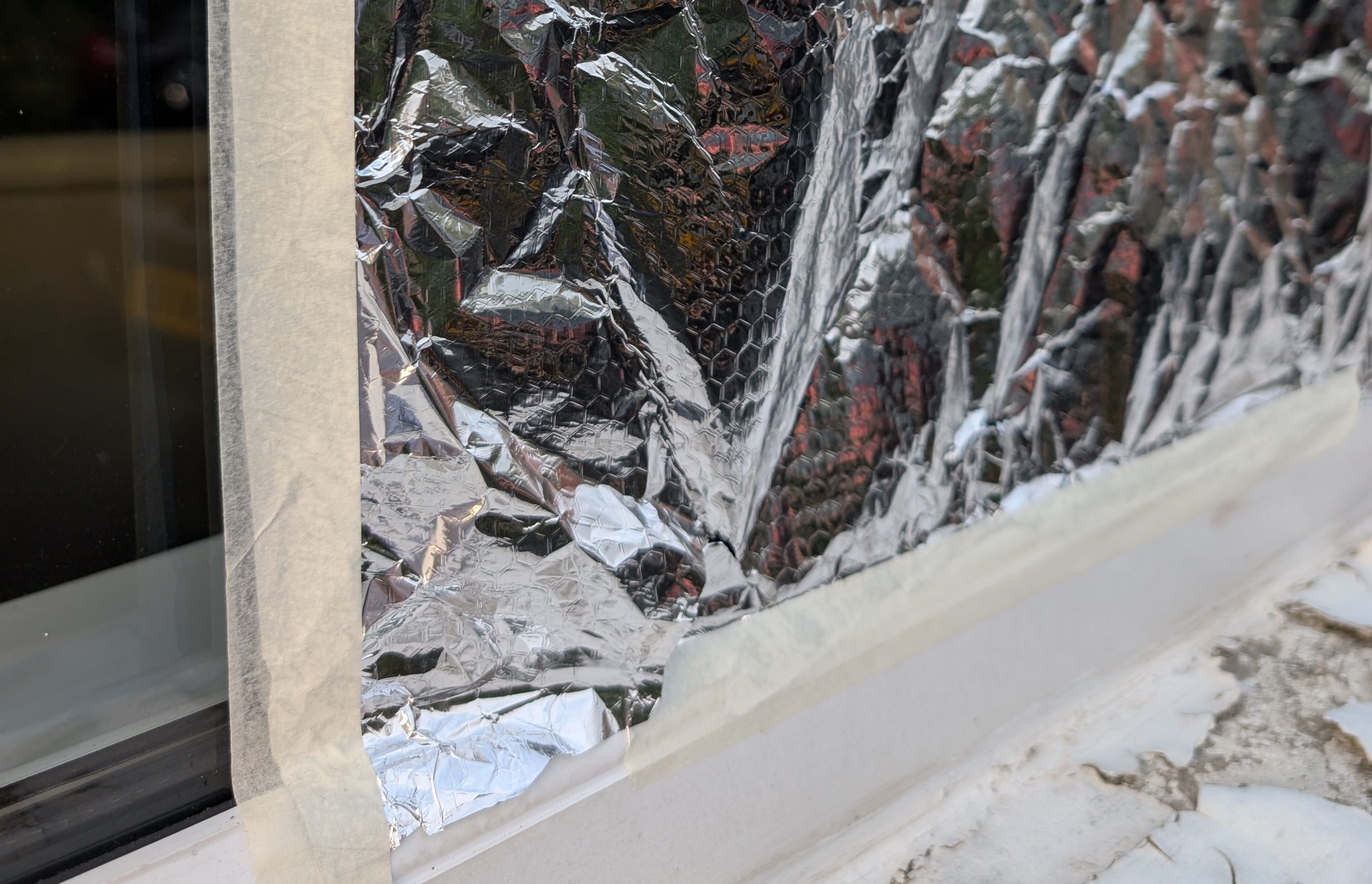
Many experts recommend that we make the most of passive cooling techniques as well – such as shading windows. At The Reengineer Towers we have put tinfoil on our living room window and it has kept the internal temperature roughly three degrees Celsius lower, according to my measurements. Please note, however, that if you want to do this you should ensure to stick the tinfoil to the outside of the window, and only if it is safe to do so. Attaching tinfoil on the inside can heat up the glass to levels that could cause it to crack.
Continental Europe has, let’s not forget, seen the worst of the stifling weather. Extreme drought currently grips western Europe, temperatures in Spain were projected to reach as high as 47C this week, and many thousands of excess deaths have been associated with the seemingly endless heatwaves.
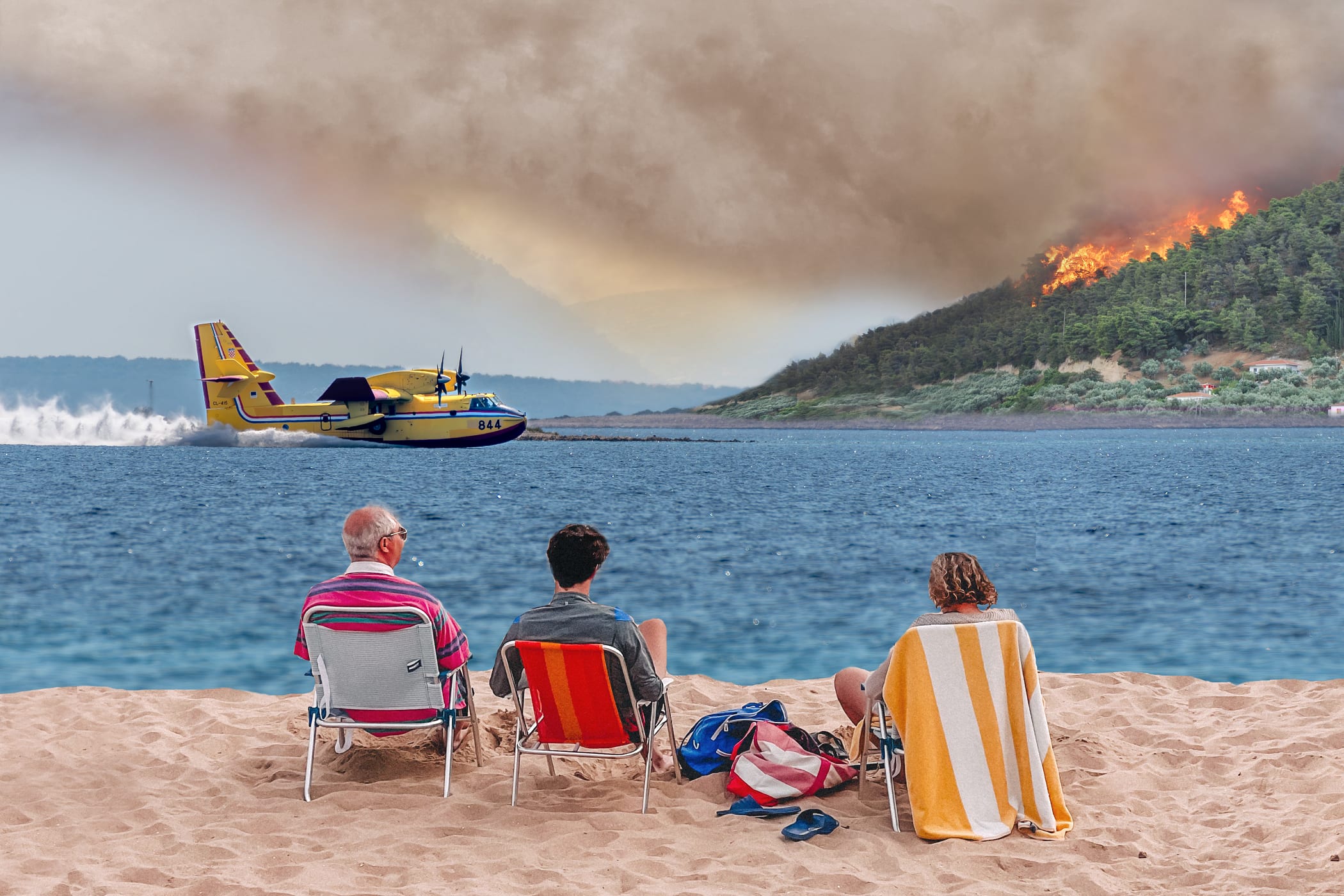
One of the big complaints climate conscious folk often voice about media coverage of such situations is that picture choices tend to focus on people spending a day at the beach, or sunning themselves in public parks, which belies the seriousness of what’s happening.
Well, here’s where I got my inspiration for the illustration at the top of today’s story. Beach-goers relaxing at a lake in France were stunned to see five aircraft dipping into the water on their mission to fight nearby wildfires.
Holidays in the Anthropocene.
The Reengineer Monitor – Stories in climate change and adaptation from around the world
An extraordinary thing happened in one Argentinian city on 18 July – the night before Argentina faced Spain in the World Cup final, which, as you all know, Spain triumphantly won. It is currently winter in the southern hemisphere but conditions in the mountain city of Salta were unusually hot that night. Weather-watchers noticed that the daily minimum temperature was projected to be an astonishing 26C or so, apparently due to the effect of a downslope Föhn, or Zonda, wind. These are dry winds that suck up heat as they pass over mountaintops and then descend hillsides, which can significantly boost the temperature of locations lower down. I checked the data for Salta and it does show elevated night-time temperatures for 18 July into 19 July. José Luis Stella of the National Meteorological Service of Argentina confirmed to The Reengineer that this was an extreme Zonda event and “unprecedented” in terms of temperature effects. “It was the highest minimum temperature ever recorded,” he says, noting heavy snowfall in the Andes and strong rains in the Río de la Plata basin. “The El Niño signal has arrived at [southern South America].” I also contacted John Abatzoglou, a weather and climate expert at the University of California, Merced, who added that while climate change may not affect the frequency or severity of Föhn winds, it could alter their impact: “This is a case where elevated background temperatures with a warming climate would compound the sharp localised warming driven by the strong Föhn wind.”
