

Weatherjammed: Endless, record-breaking rain has caused misery around the UK
Extreme weather seems to hang around for longer these days

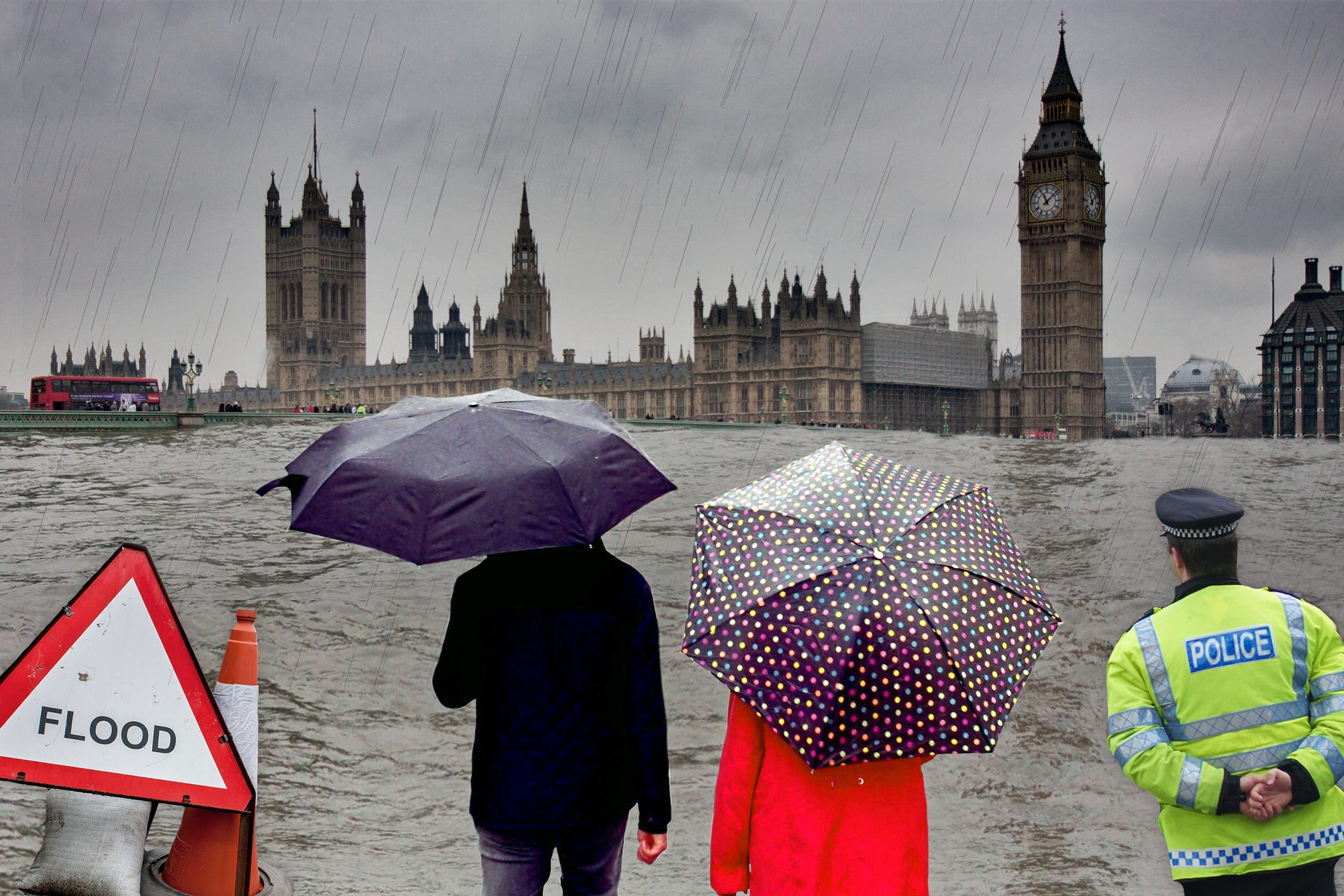
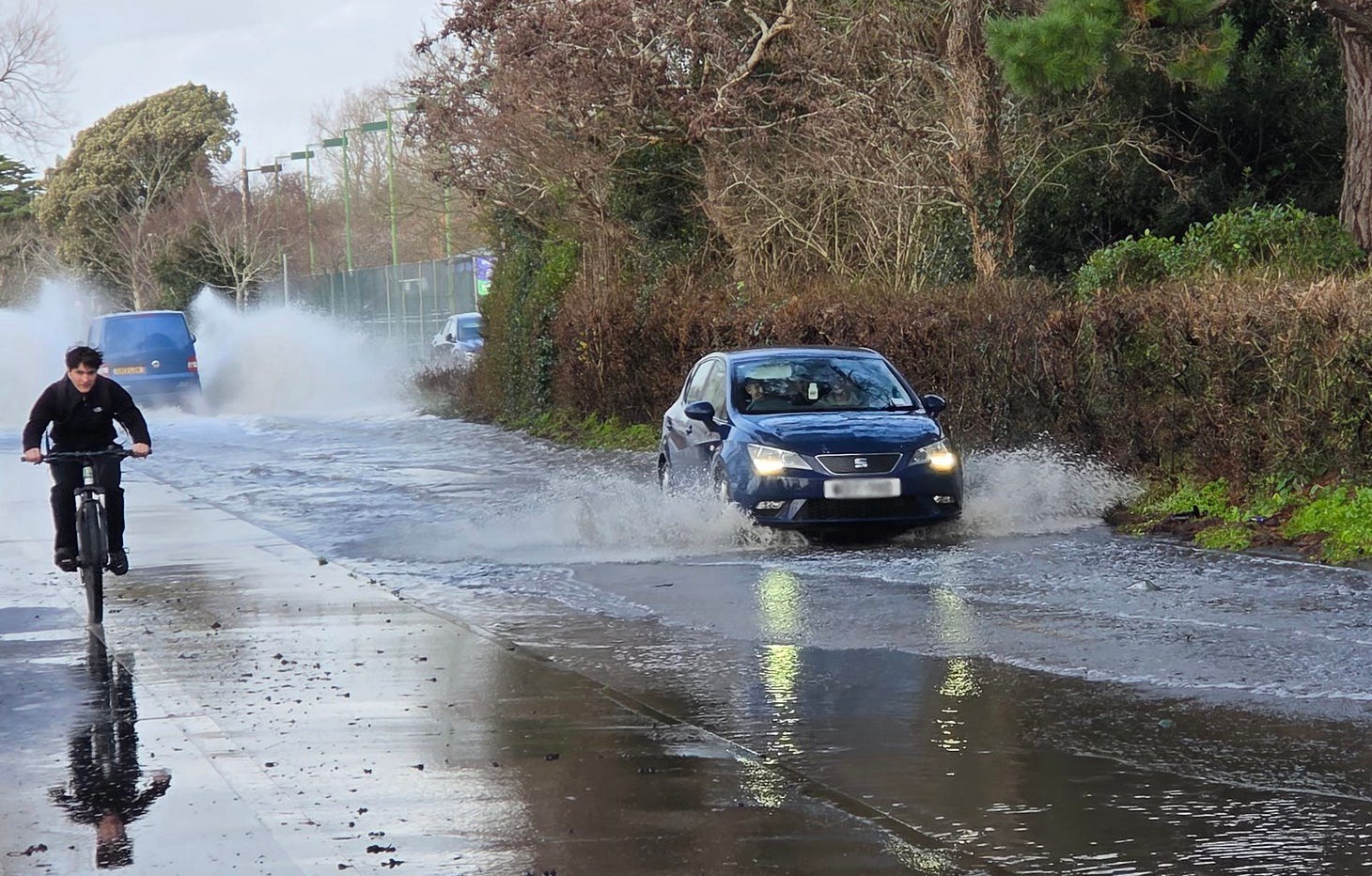
It rains quite a bit in the UK, anyone can tell you that. But this is different. In some dreary stretch of autumn late last year, the downpours started – and they’ve barely ceased since. At some point, people noticed. They noticed the leaking section of their roof on a visit to the loft. They saw the road they take to work blocked by a flood. They heard the trains were off, or that their local park was waterlogged. Many have asked in quiet disbelief: will it ever stop?
But the rain kept coming. Lashing sideways in the storms. Leaping in gutters. And heaving rivers into adjacent fields. We are powerless. It’s an air raid – water assaulting us from above, turning everything amphibious.
“It’s been so extreme,” says Adrian Hall, a resident of Wanstrow village in Somerset, where flooding has occasionally cut some people off. Locals there have used Facebook to tell each other whenever the main road through the village has been submerged. “I can’t remember when there’s been so many days of just relentless rain,” says Hall. “It gets so bloody depressing.”
Drenching rains and deluges have bothered this part of the world for many centuries. We live in a warm, damp corner of the north-east Atlantic Ocean, after all. But climate change is making even the familiar rain unfamiliar.
Stuck on you
One Cornish village recently experienced 50 days of unbroken rain. The sun didn’t shine on Aberdeen for a full three weeks. Northern Ireland had its wettest January in 149 years. And much of southern England, and eastern Scotland, have also had persistently wet weather. There’s more to come. “The seasonal forecast is saying we’re more likely to see wetter-than-average conditions over the next three months,” says Liz Bentley, chief executive of the Royal Meteorological Society. “It doesn’t look good.”
“Our climate has shifted into these more persistent patterns,” she adds. Endless rain, yes, but also heatwaves and drought that won’t budge.
People tend to have special terms for unusual periods of weather. Heatwave. Nor’easter. Dunkelflaute, or wind drought. Anticyclonic gloom. Or what about the German word for dull, wet weather: Schmuddelwetter, or “filthy weather”.
And when things get stuck for weeks or months on end, perhaps we should say: weatherjammed. As the UK was in the winter of 1962-3, when an extraordinarily cold winter brought a series of blizzards, lasting from Boxing Day right through to early March. The Big Freeze blocked roads and railway lines, trapped people in remote areas, and disrupted electricity and water supplies. Because it went on for so long, it was guaranteed a place in the national memory. No winter storm has come close to it since, though that might change in the future.
The Great Washout of 2025-6 may not be quite as serious but it is still having extraordinary impacts on people’s lives. Again, its persistence is a key part of the problem. Drains are overflowing in some areas, washing sewage into people’s homes and gardens. Meanwhile, farmers are running out of containers in which to store slurry, or liquid manure, which is used to fertilise fields. They are not allowed to spread the stuff in the rain.
‘Pothole pandemic’
Countless sporting events have been cancelled, with many football pitches and other grounds left unplayable or underwater. Construction of a hospital in Sussex has been delayed by the rain. And beware the so-called “pothole pandemic”. Water seeps into depressions in the road surface, forcing material loose whenever a tyre pummels over. If temperatures drop, the water freezes, expands and erodes the tarmac yet further.
Roofers have been showered with calls for help as leaks reveal themselves in rain-lashed abodes. “I feel sorry for the customers, more than anything,” one roofer in Cornwall, who wished to remain anonymous, tells The Reengineer. “If you haven’t got two or three days of dry weather you can’t really complete the work. The more rain we get, the more calls.”
There are also fears that the drought last year followed by recent heavy rain will send food prices rocketing – especially because both summer and winter crops have been hit.
Perhaps most troubling of all are the psychological effects. “The recent weather has been especially difficult for people suffering with Seasonal Affective Disorder,” says Debbie Keenan, a BACP senior accredited psychotherapist. “I’ve noticed an upsurge in enquiries over recent months.”
The unbroken, dull, wet conditions have the power to intensify anyone’s feelings of isolation and low motivation for doing things. Keenan notes that reduced opportunities for outdoor activities – even going for a walk – has an impact on both physical and mental health.
Feeling the pressure
What’s caused the weatherjam, exactly? Bentley says it has to do with a jet stream, an atmospheric current, bringing successive pockets of low pressure over the UK in recent months. This jet stream has been in an unusually southerly position, with Great Britain and Ireland squarely in the firing line. Plus, a blocking area of high pressure over some of Europe has given our weather little chance to shift or vary. “[The low pressure areas] were just getting stuck on top of the UK – and not just us but western parts of Europe,” explains Bentley.
A similar system of blocked pressure zones was behind The Big Freeze in the early 60s. Blocking patterns may become more common due to climate change, though there is some debate over that. Regardless of the mechanism, various studies suggest that some weather events may become increasingly persistent – from long summer spells of hot, dry weather, to extended periods of warm or cold conditions in northern parts of the globe, for example.
The UK’s rain has caused many problems but it is, in a sense, welcome. That’s because last year was very dry in many areas, leading to prolonged hosepipe bans. In parts of Sussex and Kent, such bans were only lifted a few weeks ago. “We’re in a very fragile state at the moment,” says Jess Neumann, a hydrologist at the University of Reading. “Many [reservoirs] are still well below where they should be at this time of year, despite all of this rain.”
Neumann also says that saturated groundwater can take a very long time to dry out, meaning there could be a long tail to the recent rainfall, with effects such as localised flooding lasting for weeks or more. She suggests that the whole country ought to get better at saving water in water butts and other storage systems such as mini reservoirs, which could serve a dual purpose: the water will be there when needed, while capturing more rain could itself alleviate flooding. De-paving areas by removing concrete and tarmac, where possible, can allow more precipitation to soak into the ground, too, which may prevent flooding.
As climate impacts such as the persistent rain become more pronounced, requests for interventions are getting louder. The Institution of Civil Engineers, for one, has called on the government to conduct a national economic review of resilience to help the country move away from reactive spending.
Going from one long-lasting extreme to another might be a little easier if we were better able to manage the effects of successive weatherjams. From endless rain one winter to drought the next. Neumann says, “It needs a whole shift in our thinking, our investment and infrastructure to be able to cope with these swings in weather.”
Further reading on this week’s story
Some pockets of the UK have seen truly extreme weatherjams. There’s the Cornish village mentioned in the story above but also Katesbridge in Northern Ireland, which has recorded more than 40 days of consecutive rainfall. “It’s miserable,” one resident tells BBC News.
The UK Centre for Ecology & Hydrology monitors water flow in rivers and rainfall collectors. Their interactive map reveals just how wet everything is, with high levels of water flow recorded practically everywhere.
A 2024 study suggests that the world’s population will be split into two groups, with each experiencing one of two futures: significantly wetter or significantly dryer.
Thanks for reading! If you enjoyed this story, don’t forget to share it with your friends and colleagues. You can also subscribe to The Reengineer and follow me on Bluesky.