


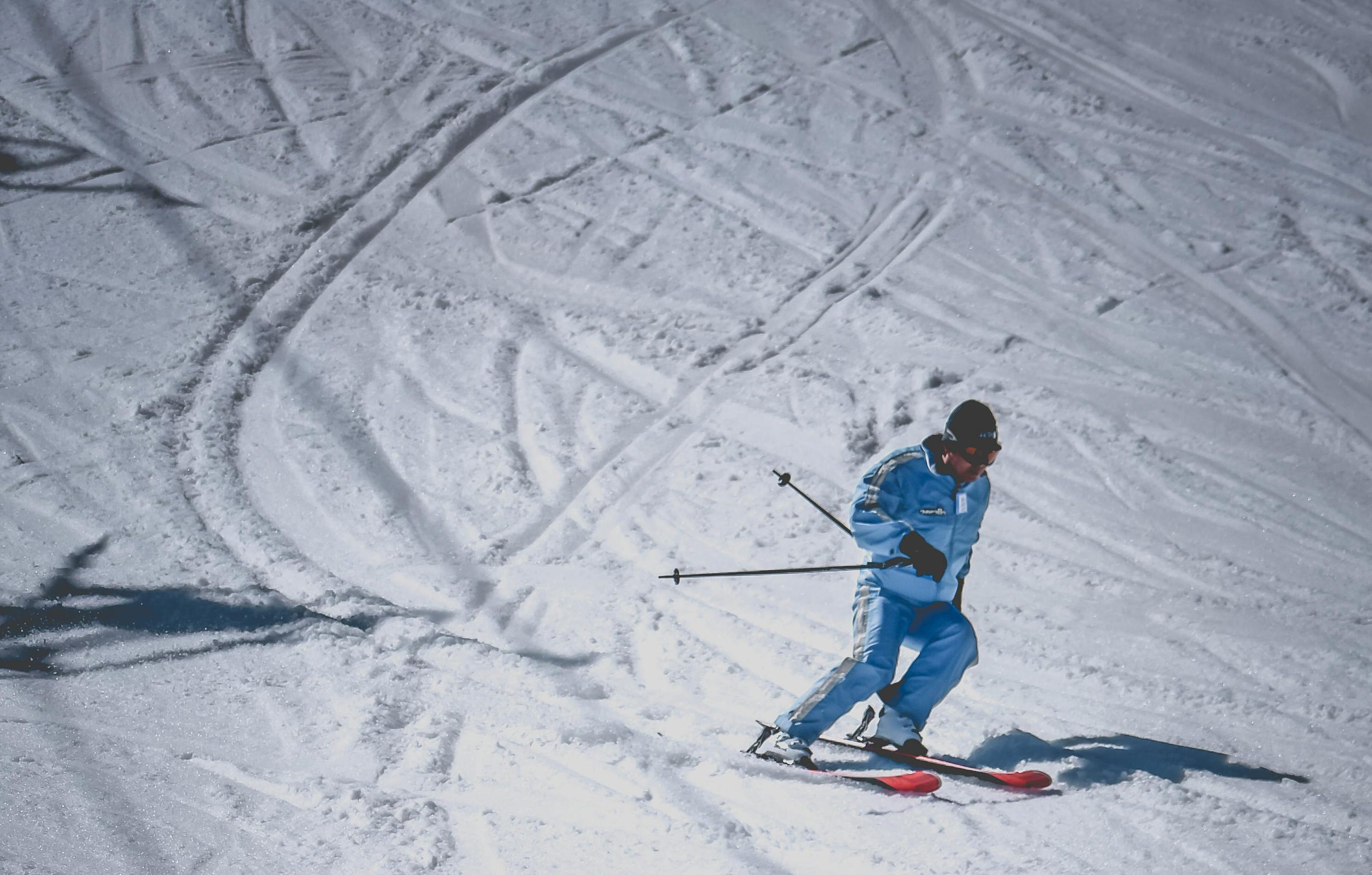
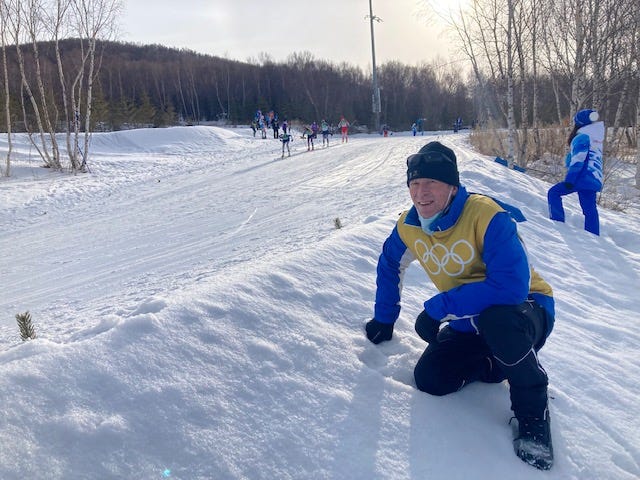
You can trace the story of the world’s slowly disappearing snow across John Aalberg’s lifetime. The former Olympic skier was born in 1960, 20 years before artificial snow was first used at the Winter Olympics, during the 1980 games at Lake Placid in the US.
It’s been used at every Winter Olympics since but not always in large quantities. Aalberg, a champion skier, competed for the US in various cross country events at the 1992 and 1994 games. “Then, snowmaking wasn’t talked about much,” he recalls. “I think at both those games I skied on natural snow.”
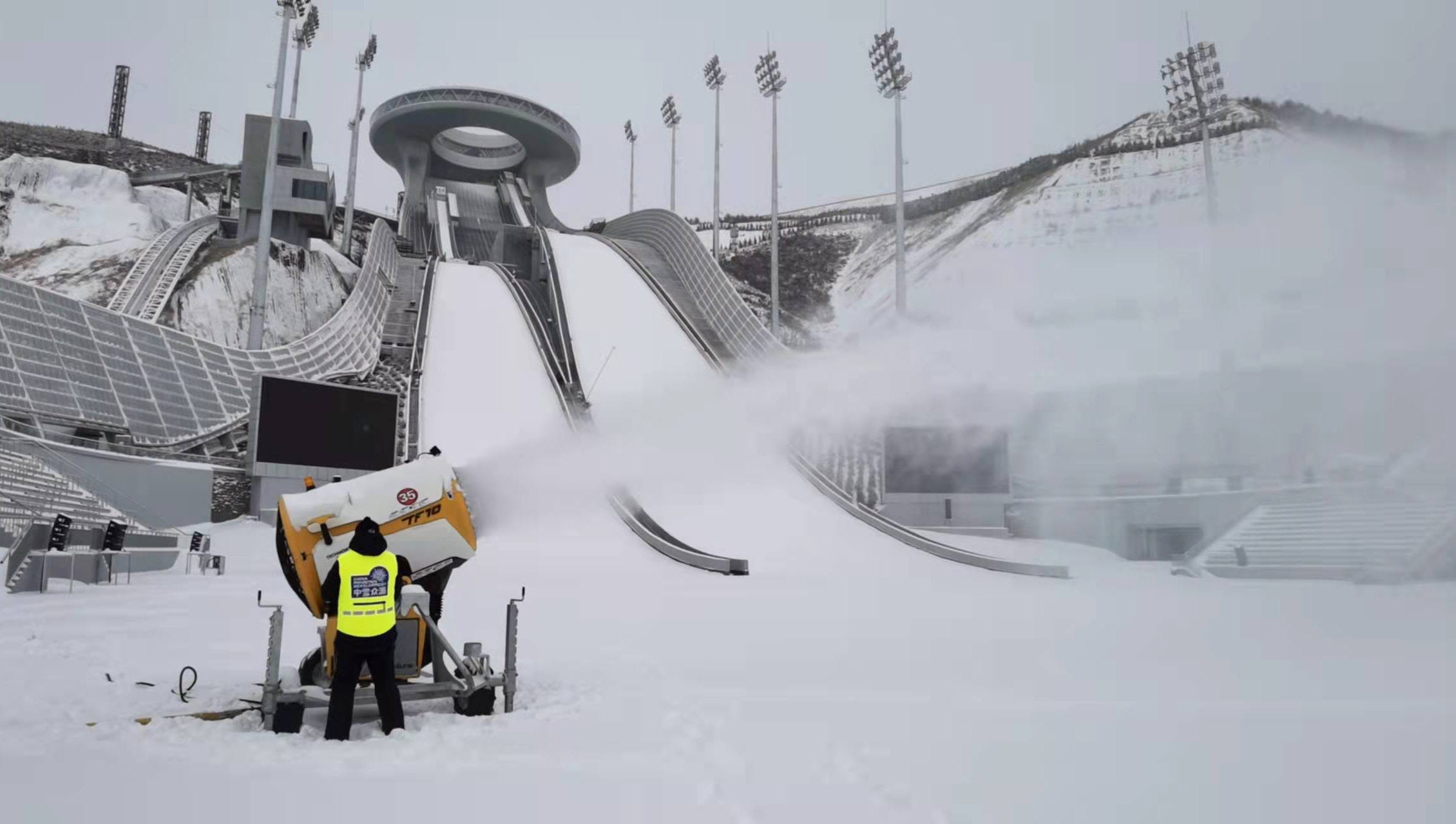
By the Beijing Winter Olympics in 2022, things had really changed. Those games took place entirely on artificial snow, a Winter Olympics first. At Milan-Cortina this year, Olympic organisers have relied heavily on artificial snow to keep events running as scheduled. Some estimates suggest that the vast majority of snow at the current games has been manufactured. There has, thankfully, been some natural snowfall, too.
“We all have experienced [it] – there’s less snow,” says Aalberg. “No-one can deny that.”
The future of the Winter Olympics is increasingly a concern for those involved in winter sports. And unbearable summer heatwaves are forcing a rethink around sports that take place at other times of the year, too. In September, World Athletics president Sebastian Coe said the global calendar of Olympic sports may have to be “reengineered” in order to adapt to climate change. Organisers are now having to reconsider the most fundamental details of their events, including when and where they hold major competitions.
For winter sports, snowmaking is increasingly de rigueur. But artificial snow, and the snowmaking process itself, are far from safe. They too are troubled by rising temperatures.
Flake to order
Aalberg has had a hugely successful sporting career. He won the Great American Ski Chase Series three times and placed as high as 12th during his appearances at the Winter Olympics. Now, besides working as an independent ski event consultant – including for the upcoming Winter Paralympics in Milan-Cortina – he runs a farm in Canada. He sees the effects of climate change there, too. “This year, […] we’ve been able to produce vegetables the whole winter because it hasn’t been freezing,” he says.
At one of his favourite ski resorts in British Columbia, Aalberg tells me that, at present, there is just 20cm of snow on the ground there. “It’s tough for them,” he says.
For winter sports, snowmaking has become practically indispensable, stresses Aalberg: “You cannot really take on a big event unless you have not only snowmaking but also a plan for snow storage.”
Data shows that the average daytime temperature in February at Winter Olympics locations has risen from around 0C during the first iterations of the games in the 1920s to more than 6C by 2014.
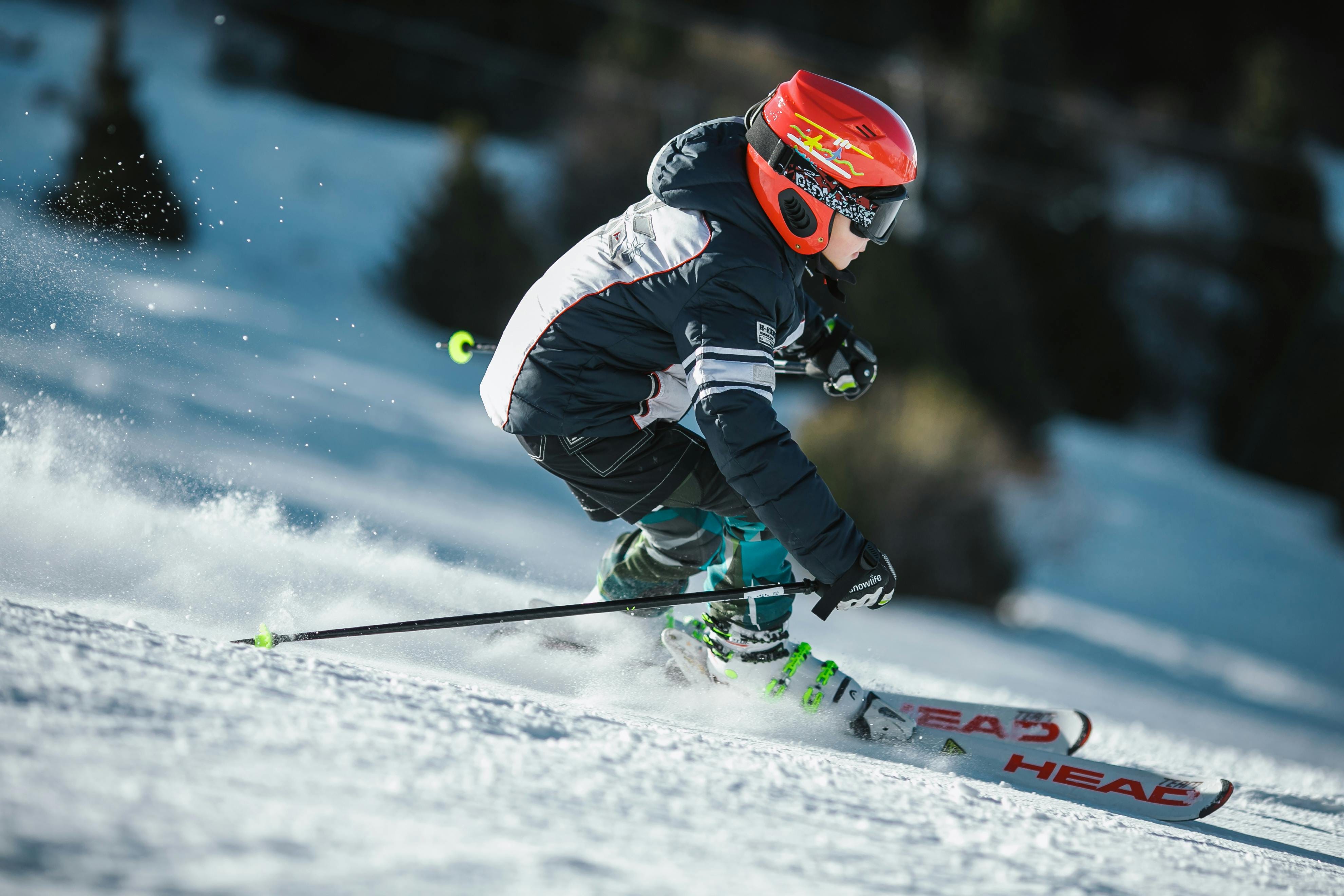
People involved in winter sports frequently discuss how climate change is affecting what they do, adds Aalberg. While outdoor winter competitions are clearly still happening, and natural variability still provides huge amounts of snow in some locations at the optimum times, the longer-term picture is starting to look quite daunting. “We’re all worried about the snow in 50 or 100 years,” says Aalberg. “I don’t know what the future holds.”
Snow by helicopter
At the 2010 Winter Olympics in Vancouver, Aalberg was general manager of the Whistler Olympic Park and also designed some of the ski trails used in the games. But poor snowfall was a problem. The snowboard and freestyle ski venues at that Olympics were plagued by low levels of snow. Organisers were even forced to bring it in by trucks and a helicopter. From as far as 60km away, says Aalberg.
Today, snowmaking at the Winter Olympics in Milan-Cortina is powered by 100% renewable electricity but some have criticised winter sports competitions for heavy use of snowmaking equipment – given its significant energy and water requirements. A study published last month noted that the rise of renewable energy on electricity grids is helping to reduce the carbon footprint of snowmaking over time. The authors estimated that a unit of snow production at the Salt Lake City Winter Olympics in 2002 would have created 16 times the equivalent CO2 emissions of a unit of snow production at the upcoming French Alps games in 2030.
Aalberg says he expects to use salt at the Winter Paralympics in March, in order to toughen the fragile snow surface and boost its longevity. This is an increasingly common intervention but comes with some risks: “The snow crystals become round, almost like ball bearings,” explains Aalberg. “They don’t bind to each other anymore.” It can make the snow surface more difficult to ski on.
Organisers of some winter sports events are going to extreme lengths to try and hold snow in place. “[For alpine races], they just bore holes in the snow, inject water in those holes, and then let that freeze overnight,” says Aalberg. Almost like icy rebars, reinforcing the snow itself. “But it’s a tonne of work, and so slow. When they do that, it takes all night.”
Besides such measures, competition-holders are increasingly reconsidering when they schedule races, and even the length of races. It might be, in some cases, that skiers are prevented from warming up on the course – to protect the fickle snow, adds Aalberg. There’s also talk about shifting the entire winter sports season from November-March to January-April because snowfall in the early winter is now notoriously unreliable. “That hasn’t happened yet,” he says.
Getting higher
But something else has changed. In 2024, the International Ski and Snowboard Federation adjusted its regulations, allowing certain winter sports to take place at altitudes up to 2,000m – an increase from the previous limit of 1,800m. This reflected a “new reality” in the desperate pursuit of more reliable snow, according to winter sports news website FasterSkier.
But even this change could have problematic effects on competitions. There have long been fears over whether events held at high altitudes could mean that a banned practice known as “blood doping” becomes more effective. This form of doping, used by some unscrupulous athletes to unfairly boost their performance, can involve taking blood transfusions in an attempt to increase the total amount of haemoglobin in their blood, enabling it to carry more oxygen. “Manipulating the blood gives much more advantage the higher the elevation you compete at,” says Aalberg.
The headaches that come with significantly altering things just to cope with climate change reveal what reengineering really means. It’s not easy, it’s not without its own risks – but, in so many areas of life, it seems increasingly unavoidable.
Aalberg and others like him are watching the very nature of their sport change right in front of them. “It’s too bad that kids, the new generations, can’t just put their skis on,” he laments. And, he adds that he has long dreamed of finding a way to stop snow melting – some means of really holding it in place, without modification, for the desired time. What a thought. “I don’t think anyone has any ideas yet,” says Aalberg.
Further reading on this week’s story
A brilliantly produced online feature from BBC Sport takes a deep dive into the future of the Winter Olympics. The story includes lots of data and infographics revealing how the environmental reality of the games has changed during the roughly 100 years that these events have been held.
In 2022, researchers published their findings from a survey of 339 elite winter sports athletes and coaches from 20 countries. The results spell out concerns over the viability of the winter games, including one skier’s comments that warmer temperatures lead to heavier snow that can be unsafe to ski on at high speeds.
Thanks for reading! If you enjoyed this story, don’t forget to share it with your friends and colleagues. You can also subscribe to The Reengineer and follow me on Bluesky.